“We don’t need research. It’ll just tell us everything we already know.”

There you have it. My most dreaded statement. As a research professional with 25 years of experience, this kind of sentiment causes heart palpitations every time. Why? Because it’s just not true. Market research is powerful. It helps us learn from the past, develop the present, and predict the future. I have seen market research launch successful companies, turn around failing companies, refresh tired brands, generate game-changing innovations, increase customer loyalty, improve employee engagement, and restructure organizations.
So why do some people still shun research? Because they haven’t experienced market research that has actionable insights.
If someone has invested money in market research and doesn’t get any insight on what to do with the information, it becomes research for the sake of research. That’s why it’s essential for any researcher and/or company to connect research questions with business objectives and desired business outcomes. Otherwise, the resulting research becomes a 150-page, beautifully designed PowerPoint presentation. And nothing more.
So what does research that will create actionable insights look like? Simple. It’s a series of questions that have to be answered in order to make the right business decisions. The following is a high-level list of questions I use. In fact, before I even develop a proposal, let alone the research, I ask these questions:
- How will knowing this information impact the business? Do you need to…?
- Grow your customer base
- Increase purchase frequency
- Improve profitability
- Reach new audiences
- Increase customer retention
- Other?
- What results do you expect to see from this research? What are your hypotheses?
- What research findings would make you pursue this idea? What would make you stop? Why?
What are actionable insights?
Actionable insights are findings that point directly to a business decision, strategic change, or measurable next step. They connect evidence to an organization’s goals and clarify what leadership should do next. In brand research, actionable insights bridge the gap between raw information and a brand strategy that supports business growth.
That distinction matters. Data analysis might reveal that consideration has declined among an important customer segment. A useful insight explains why. An actionable insight identifies the brand perceptions driving the decline, connects them to growth goals, and recommends a focused response. This gives CEOs and CMOs a clear basis for decisions about positioning, messaging, customer experience, or investment.
To produce actionable data, researchers must analyze data in the context of the organization’s current priorities. The finding should be timely, relevant to the decision, supported by evidence, and specific enough to guide action. It should also establish ownership and a baseline for measuring results. Even an interesting discovery has limited value if it cannot inform a decision or be tied to a business outcome.
What are examples of actionable insights?
Imagine that brand research shows high awareness but low consideration among a profitable customer segment. “Consideration is low” is a data point. An actionable insight identifies the reason, perhaps customers do not understand the brand’s distinctive value, and recommends refining the positioning and messaging for that audience. Success can then be measured through changes in consideration, preference, conversion, or revenue.
The same principle applies across the brand. Research might reveal an unmet market need, show which audiences offer the greatest long-term value, or uncover gaps between the brand promise and the customer experience. Each insight becomes actionable when it informs a strategic choice and defines the expected outcome.
What are the four types of insights?
Four commonly used analytical lenses help leadership teams move from information to action:
- Descriptive insights explain what happened by summarizing historical data.
- Diagnostic insights examine why it happened by identifying patterns and contributing factors.
- Predictive insights estimate what is likely to happen next based on available evidence.
- Prescriptive insights recommend what the organization should do in response.
These lenses build on one another. Descriptive and diagnostic analysis create understanding, while predictive and prescriptive analysis support forward-looking decisions. Strong brand research often combines all four to create a clear line of sight from market evidence to business strategy, brand strategy, and execution.
What is an example of actionable?
An actionable recommendation is concrete and measurable. For example: “Research shows that decision-makers associate the brand with reliability but not innovation, limiting consideration for the company’s new offering. Refine the positioning and proof points around innovation, activate them across priority touchpoints, and measure changes in perception, consideration, and qualified demand over the next two quarters.”
This recommendation identifies the issue, the strategic response, and the measures of success. Creative development and brand activation follow from the research and strategy rather than serving as the starting point.
What is another word for actionable insights?
Depending on the context, actionable insights may also be called decision-ready insights, strategic findings, practical recommendations, or evidence-based recommendations. Whatever the label, the standard remains the same: the insight should help leaders align brand strategy with business strategy, make a better decision, and pursue a measurable outcome.
When research isn’t linked to business objectives, it isn’t actionable. Here’s an example:
A consumer luxury product company conducted a large-scale market research study to determine the feasibility of a new product. The researcher designed and fielded the study and determined there was an exceptionally high level of interest in the product at a particular price point relative to the interest they had seen in past product research. The research recommended continuing with product development and launch.
However, the research failed to understand the desired business outcome for the launch of the new product.
The Situation: The client wanted to launch a new product and needed to understand price sensitivity and ultimately how to price it.
The Client’s Research Request: What is the level of interest in this product at various price points? How should we price it at launch?
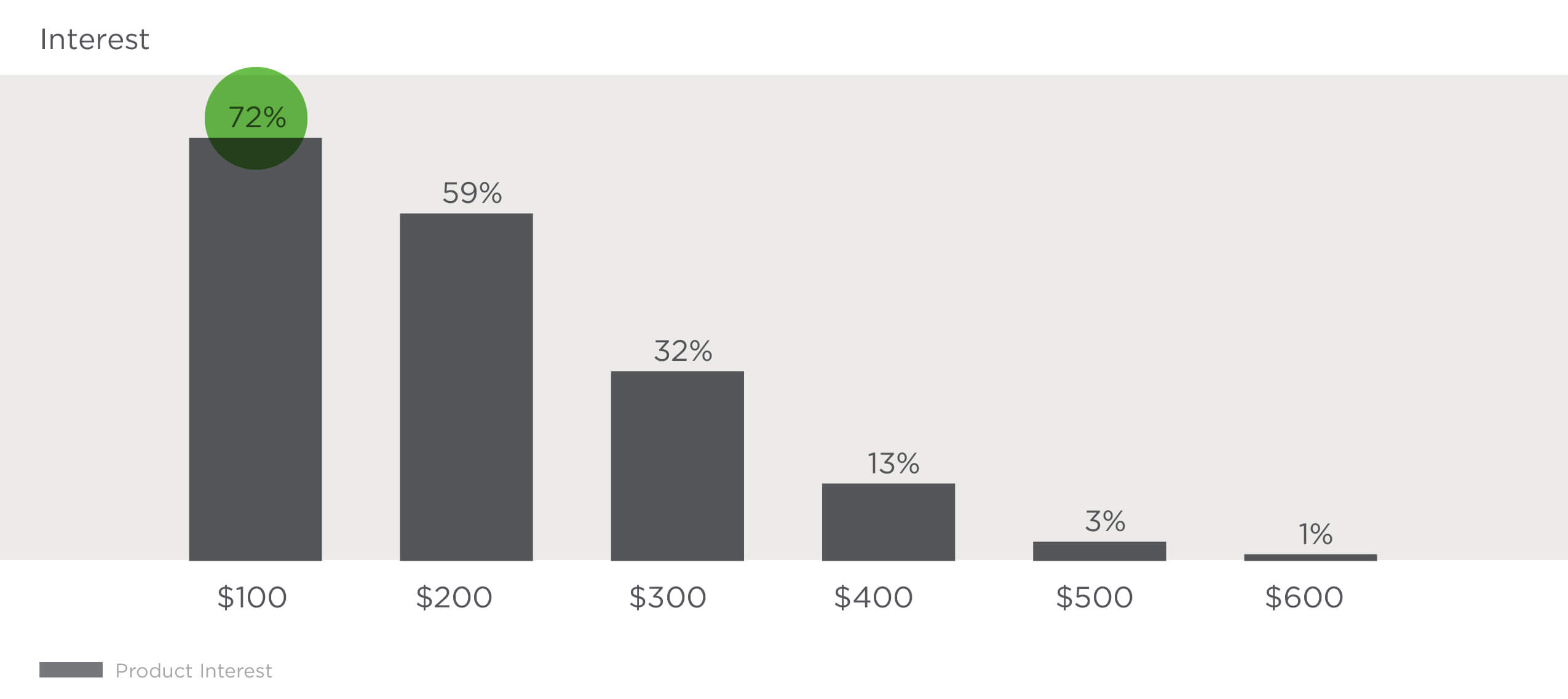
The Research Results: There were exceptionally high interest levels and strong KPIs for the idea overall. The highest level of interest was at the $100 price point and dropped precipitously at each increment thereafter. The researcher made an unequivocal recommendation to pursue launch at the $100 price point.
The Business Results: The company launched the product at $100 and saw product sales ramp up quickly. However, the company did not meet their revenue goals, so they increased the price. But unfortunately, a price increase for a product that was not positioned to be premium had a dramatic and negative impact on both interest and revenue. The company eventually pulled the product.
So what happened? The breakdown in communication happened when the desired business outcome of this new product was not clearly articulated. The product manager simply asked the researcher to determine if the product was a good idea and what the price point should be. Which meant the research recommendation was not crafted to answer the actual business question, so the results were ultimately not actionable.
It turns out this new product was created to help the organization double its revenues in three years. While the research recommendation was well thought out, it was not framed by how the company could utilize the new product to double the revenues. If the research recommendation would have been presented in the correct business frame, it would have recommended launching and pricing the new product at $200.
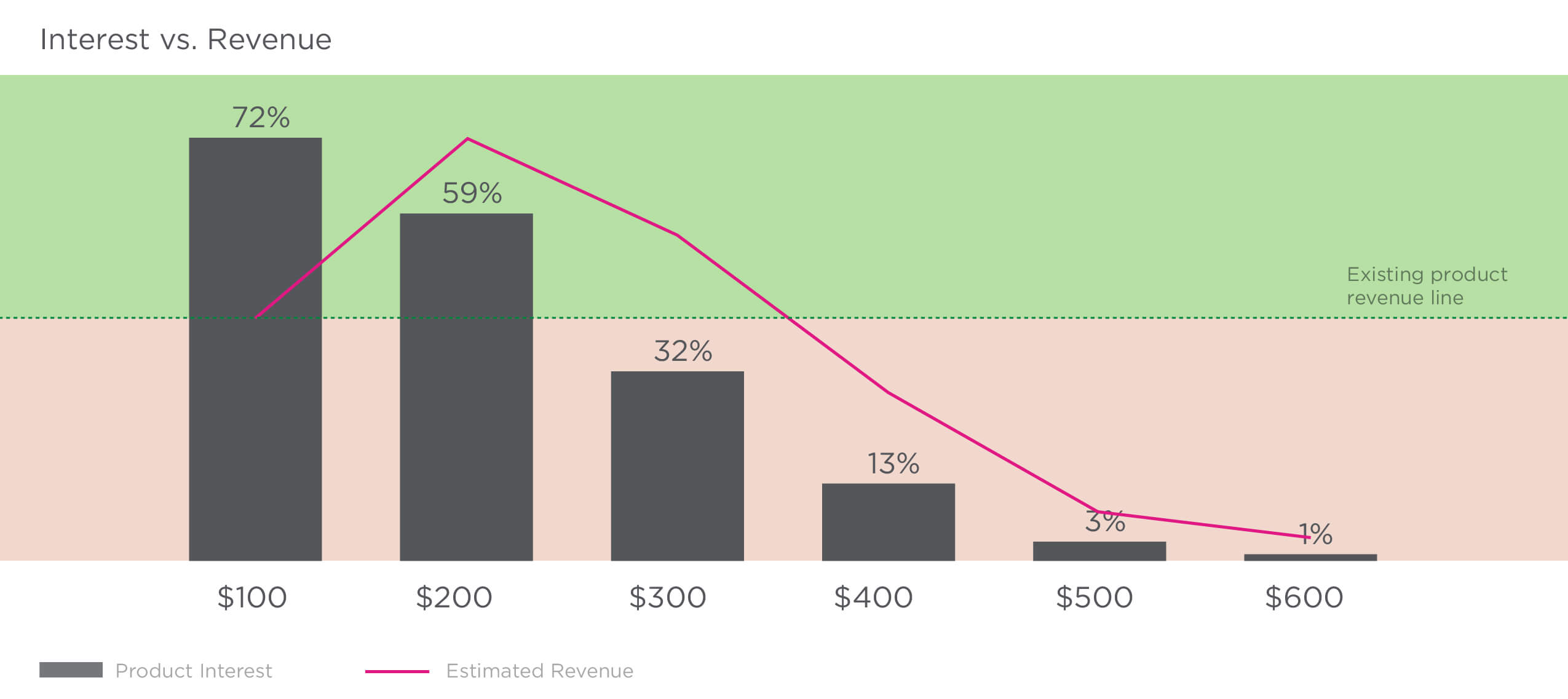
While the highest number of people were generally interested in the product at the lower price point, the predicted revenue fell significantly short, despite a significant adoption rate in market. Even with a much lower overall interest at the higher price point, the balance of volume with price predicted a much higher revenue over time. In fact, those interested in the higher price were more committed to buying it.
The moral? Before embarking on any research engagement, be sure to clarify the business objectives and desired outcomes. Because if research isn’t designed or analyzed to address a specific business need, it is not actionable and its main outcome will most likely be this: Another jaded professional ready say, “we don’t need research.”
At the Brand Consultancy, we always begin our healthcare branding services by identifying business goals and objectives. It's the foundation of every successful campaign and professional relationship.