Many executives ask the same question: “What does brand success actually look like?” Despite significant investment in branding, too many organizations struggle to connect brand activity to business outcomes. The result? Frustration, misalignment, and missed opportunities.
At the heart of the issue is measurement. Without the right brand metrics, marketing can’t prove its value, leadership lacks direction, and brand strategy becomes guesswork. True brand-driven growth demands more than awareness scores or social media likes. It requires a holistic view of metrics that inform decisions, align teams, and drive performance.
At The Brand Consultancy, we believe brand measurement shouldn’t be a frustration. It should be a strategic advantage. That’s why we go beyond surface-level metrics to deliver insights that drive real business outcomes.
Why brand metrics are often misunderstood
Too often, brand metrics are reduced to vanity numbers or siloed KPIs that fail to reflect the full picture. Many companies rely on outdated tools, incomplete data, or disconnected frameworks that don’t link brand activity to business performance.
The result? Misalignment across teams, wasted investment, and missed opportunities.
Without a shared understanding of what brand performance means, teams chase disconnected goals. Worse, they can’t link brand equity to business impact, leaving the C-suite in the dark and marketing ROI in question.
We address this gap by aligning brand KPIs across the full range of a business, including brand, marketing, product, finance, HR, leadership, operations, and more, ensuring every metric is meaningful, actionable, and tied to growth.
Most organizations already have the data they need. The challenge is bringing it together. Brand, customer, financial, and operational metrics are often managed in isolation, making it difficult to understand how changes in one area influence another. Instead of a unified view of brand performance, leadership gets fragmented reporting and incomplete insights.
Effective brand measurement requires an integrated framework that connects leading indicators, such as brand awareness and customer perception, with lagging indicators like customer lifetime value, market penetration, and commercial performance. Only then can leaders distinguish between short-term campaign results and long-term brand health, prioritize investments with confidence, and align the organization around a common definition of success.
What happens without clear brand metrics
Brand performance measures how well a brand is meeting its strategic objectives, from awareness and preference through to loyalty and revenue contribution. When it isn't measured effectively and holistically, the consequences ripple across the organization:
- Opportunities are missed because insights are shallow or absent.
- Brand experiences become inconsistent, weakening equity and trust.
- Internal teams lose confidence, leading to frustration and misalignment.
- Budgets are misallocated, with no clear sense of what’s working.
In short, without focus, brand becomes a cost center instead of a growth engine.
How we define and deliver the right brand metrics
At The Brand Consultancy, our brand measurement approach is grounded in rigor, relevance, and real-world results. We track holistic brand health and translate it into actionable business intelligence. Our methodology goes beyond traditional sales and marketing funnels to capture broader business performance indicators. By integrating brand KPIs with enterprise-level metrics, we help organizations understand how their brand is perceived, and how it’s performing as a driver of growth, alignment, and long-term value.
We use a comprehensive suite of tools, including:
- Longitudinal tracking studies to monitor brand performance over time and against competitors. This matters because most buyers are already deep into their own research before a brand ever hears from them, so unaided recall and organic visibility carry more weight than they used to.
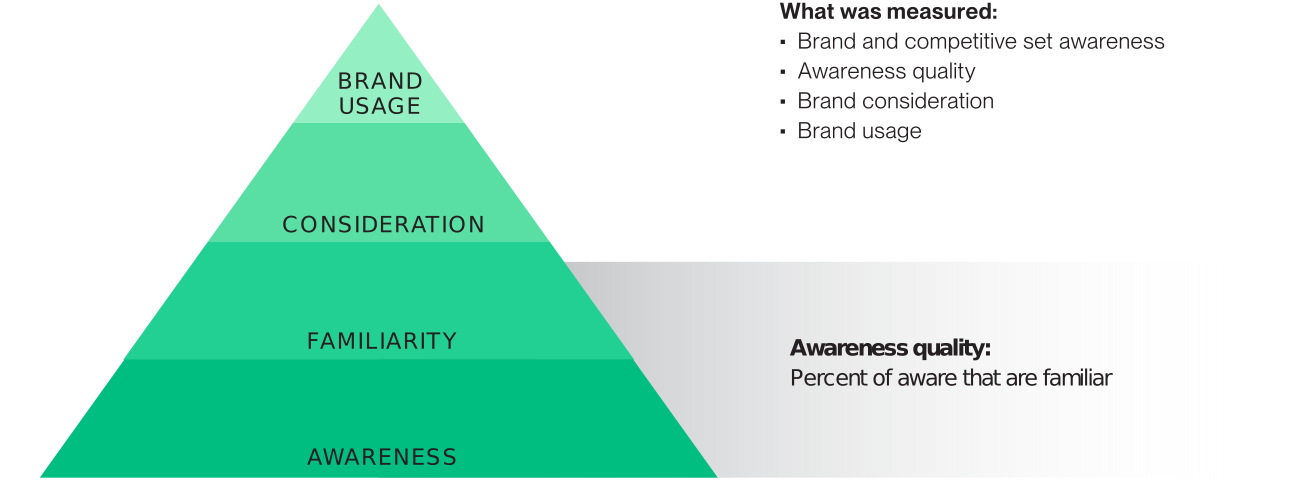
- Awareness, consideration, and choice metrics to assess funnel effectiveness
- Advertising impact and campaign effectiveness analysis, including emotional connection and uniqueness
- Statistical significance testing to identify meaningful trends and guide strategic adjustments
Five metrics tend to matter most across the brands we work with:
- Net Promoter Score (NPS)
- Brand recall and recognition
- Share of voice
- Customer lifetime value (CLV)
- Market penetration
These metrics are critical for evaluating whether a brand is achieving its strategic objectives and assessing the impact of new initiatives. Additionally, their greatest value comes from how they work together. Rising awareness without a matching gain in preference tells a different story than rising awareness paired with stronger loyalty and higher lifetime value. Looking at those relationships shows where momentum is building, where friction exists, and where to intervene.
Example insight:
A healthcare client saw strong gains in awareness and consideration, but choice remained stagnant. Our analysis revealed a need to strengthen lower-funnel messaging. The result? A more targeted strategy that moved the needle on preference and conversion.
Strategic outcomes from better brand metrics
When you measure what matters, you unlock strategic focus:
- Stronger alignment between marketing, leadership, and sales
- Clear ROI on brand investments
- Smarter decisions on brand activations and messaging
- Greater visibility into brand’s contribution to business growth
Better measurement does more than improve reporting. It creates alignment. When marketing, sales, finance, and leadership evaluate performance through the same framework, decisions get grounded in shared evidence instead of competing interpretations.
It also changes brand's role in the business. Instead of asking whether a campaign performed well, leadership starts asking whether the organization is strengthening customer relationships and building long-term value. Brand becomes part of business planning, not a standalone marketing conversation.
"Based on our longstanding partnership and the high caliber work they continue to do for us, we have significantly increased awareness and consideration of our brand and increased top line revenue, all with our executive team aligned on key brand metrics.” VP, Brand Marketing & Strategy
Our work transforms raw data into strategic guidance that drives decision-making.
From measurement to momentum
The organizations that benefit most from brand measurement are not those with the largest dashboards. They are the ones that use measurement as a management discipline.
That means establishing clear definitions, assigning ownership, measuring consistently over time, and translating insights into action. It means understanding which changes represent normal market movement and which require strategic intervention. Most importantly, it means viewing brand metrics as business indicators that guide decisions across the organization, not simply marketing KPIs.
When measurement becomes part of how leadership manages the business, brand strategy becomes more focused, investments become more effective, and growth becomes more predictable.
Ready to fuel business focus?
What are brand metrics?
Brand metrics are the quantitative measures that show how a brand is performing in the market, from how well it's recognized to how strongly it drives revenue. Used well, they connect brand-building activity to business outcomes instead of leaving it as a matter of opinion.
What is brand awareness, and how is it measured?
It’s typically measured in two ways: unaided recall, where someone names your brand without a prompt, and aided recognition, where they identify it from a list. Both matter, but unaided recall is the stronger signal.
How often should brand metrics be tracked?
Brand health is best measured quarterly, with select metrics reviewed monthly to catch shifts early. Tracking too infrequently means you find out about a problem after it's already cost you.
What's the difference between a vanity metric and a meaningful one?
A vanity metric moves without telling you why or what to do next: think raw social media likes. A meaningful metric is tied to a decision: it tells you what changed, why, and what action it should trigger.